

Archaeological Site of Ancient Messini

The Archaeological Site of Ancient Messini is situated in the western foothills of mountain Ithomi, near the village called today Mavromati. A large part of the city has come to light, which reveals its great expanse and also its significance during ancient times. Ancient Messene was built in 369 B.C. by the general Epaminondas from […]
Environmental museum of Stymphalia

The Environmental Museum of Stymphalia, whose aim is to show the interdependence of mankind and Nature, focuses on their harmonious coexistence in the Stymphalia basin. Its objective is to raise the public’s ecological awareness and preserve the knowledge of the region’s traditional technology. Exhibits of the Environmental museum of Stymphalia The Environment Museum of Stymphalia […]
Archaeological Museum of Sikyona
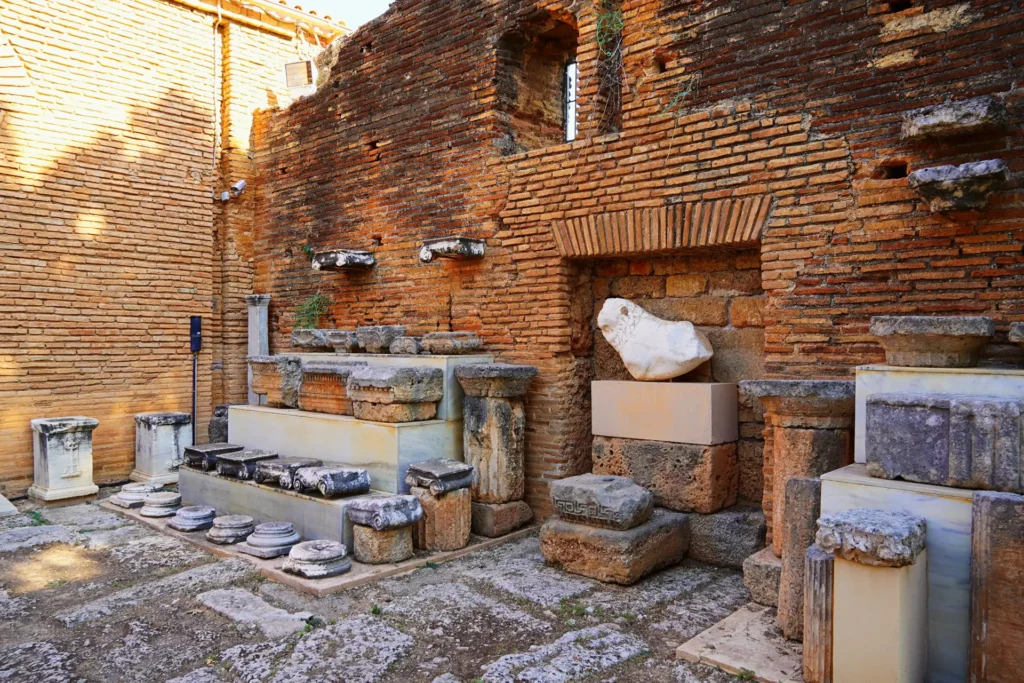
Going up the Vasilikos (Sikyona) plateau, the Byzantine church of Agia Triada, the Archaeological Museum of Sikyona, built in the 12th century, welcomes the visitor to the village. Continuing the journey west bound, leads to the archaeological site. Amongst the Hellenistic and Roman architectural, the low mud brick building of the museum is noticeable. The […]
Archaeological Museum of Nemea

The Archaeological Museum of Nemea was founded as a result of the excavations that were conducted in the area by the University Berkeley of California and mainly to the generosity of Mr Rudolph A. Peterson. It was donated to the Greek State on March 28th 1984. The museum entrance is on the west side, while […]
The Acrocorinth Castle of Corinthia

The castle of Acrocorinth, the biggest in Moreas, was the watching eye of the entire Peloponnese. Excavations started in 1961 by the Archaeological Institute of America. It was created during the reign of Sisyphus, the mythical king of Corinth, and its first fortification took place in the late 7th- early 6th century, during the Kypselid […]
Stymphalia Archaeological Site

The ancient town of Stymphalia was probably founded in the archaic period and it was named after its first inhabitant, Stymphalos. The region belonged to the Arcadians. The town was built on the north shore of Stymphalia lake. A large part of the archaeological site lies under water. Excavations have brought to light a theater […]
Archaeological Site of Hereon
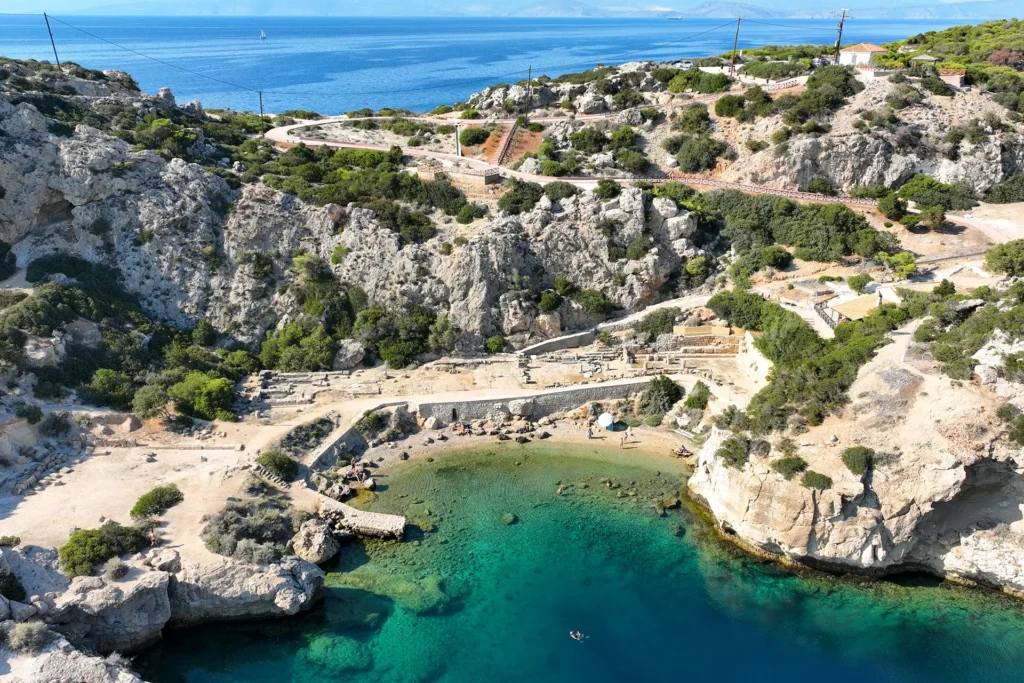
The Archaeological Site of Hereon is located 15 kilometers to the northwest of Ancient Corinth, at the end of Perachora peninsula. Excavations carried out in the region have brought to light the temple of Hera and significant remains of the early Corinthian civilization, such as an L-shaped stoa, a large cistern, dining rooms and a […]
Archaeological Site of Pheneos

The first settlers of Pheneos were the Pelasgeans. Later, in 1900 B.C. it was inhabited by the Arcadians. They were succeeded by the Achaeans, in 1500 B.C., who created the Mycenaean center of Pheneos and participated to the Trojan War with sixty soldiers under the rule of Agathenoras, king of the Arcadians. The acropolis of […]
Ancient Sicyon of Corinthia

Ancient Sicyon is located on the mound of Vasiliko, a village 4 kilometers to the southeast of Kiato, head of the municipality of Sikyona. In antiquity it was bordered with Corinth to the east, with the Achaean Pellini to the west, and the Arcadian Fliounta and Stymfalos to the south. It was built on a […]
Archaeological Site of Nemea

Nemea is a land of legends and traditions. It was the home land of the Nemean Lion, slayed by the legendary Hercules. The Nemean lion was a vicious monster that lived in a cave on mount Triton. Hercules trapped the beast and then killed it with his club. The archaeological site is located on the […]